
If you are planning a construction or renovation project in Canberra, one of the first decisions you will face is how to place your concrete. Should you rely on traditional manual methods, or use modern pumping equipment?
This choice affects more than just speed. It influences labour effort, project quality, accessibility, and overall efficiency. In areas across Canberra, where properties often include tight access, slopes, or limited working space, the method you choose can significantly impact the outcome.
This guide explores the real differences between concrete pumping and manual pouring. It explains how each method works, where each is most suitable, and how to decide which option fits your project best.

Understanding the Basics of Concrete Placement
Before comparing the two approaches, it is important to understand how each method works in simple terms.
What Is Manual Concrete Pouring?
Placing of concrete was traditionally done by hand. Once the concrete has been trucked to the pour area the men carry it to the pour area using the following tools:
- Wheelbarrows
- Buckets
- Shovels
The team then spreads and levels the concrete by hand.
What Is Concrete Pumping?
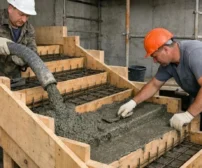
Concrete Pumping entails the use of special equipment that pumps concrete directly from the truck to the site by means of hoses or mechanical arm.
Many concrete pump hire Canberra contractors in Canberra have the choice of employing either boom pump or line pump in accordance with the site conditions.
Speed Comparison: Which Method Is Faster?
Speed is often one of the biggest deciding factors in construction projects.
Manual Pouring Speed
Manual methods are clearly slower, due to:
- Concrete cannot be carried by any mechanical means.Concrete has to be physically moved.
- Multiple trips are required
- If the machine becomes tired, its efficiency will decrease over time.
This might not be an issue for small areas. As projects get larger, however, delays become more evident.
Concrete Pumping Speed
Concrete pumping greatly increases speed by:
- Delivering concrete continuously
- Reducing manual handling
- Allowing precise placement
Manually this type of project may take hours, with pumping they can be done much faster.
Real-World Example in Canberra
Think about doing a project in a suburban Canberra house that has a tight access road.
Manual method: Workers have to repeatedly move concrete through a side path.
Pumping method: Concrete is poured straight to the backyard with a concrete pump
In this case time and effort will be significantly saved when pumping is used.

Labour and Effort: Which Requires More Work?
Manual Pouring Labour Requirements
Manual pouring needs more manpower, because:
- The material needs to be transported manually as concrete.
- There is a need for continuous physical effort.
- Workers may require rest, slowing pace,
This can be a physically demanding technique, particularly for larger pours.
Concrete Pumping Labour Requirements
Concrete pumping saves labour by:
- Minimising heavy lifting
- Reducing the number of people working the pour
- Improving workflow coordination
Teams can concentrate more on completing rather than transporting materials.
Accessibility: A Key Factor in Canberra Projects
Access in Canberra’s residential and commercial developments is sometimes difficult.
Challenges With Manual Pouring
Manual pouring becomes difficult when:
- Access paths are narrow
- The site is far from the street
- The terrain is uneven or sloped
In such cases, moving concrete manually can slow down the entire project.
Advantages of Pumping in Difficult Locations
Concrete pumping is a very effective method in tough applications as it can:
- Climb over fences/structures
- Use hoses to navigate in narrow areas.
- Provide concrete to high and remote areas
It is one of the primary reasons for the extensive use of concrete pumping services Canberra for contemporary projects.
Quality and Precision: Which Delivers Better Results?
Manual Pouring Quality
Manual methods: Quality is dependent on:
- Worker experience
- Consistency of placement
- The time required to apply and level the sand.Applying and leveling time.
Sometimes delays may occur in the finish, if the concrete starts setting before it is properly placed.
Pumping Quality
Concrete pumping helps to improve quality through:
- Delivering concrete evenly
- Minimising delays in placement
- Providing more flow control
This can lead to a better-looking and uniform finish.
Project Size: Which Method Suits Different Jobs?
Best Use Cases for Manual Pouring
Manual pouring may be appropriate for the following:
- Very small projects
- Open spaces areas of easy access
- Simple slabs or footings
Best Use Cases for Concrete Pumping
Concrete pumping is ideal for:
- Medium to large projects
- Driveways and slabs with limited access
- Multi-level or complex pours
Many homeowners searching for concrete pouring services near me Canberra often choose pumping for these reasons.
Time Efficiency vs Planning Requirements
Manual Method Planning
Manual pouring requires:
- Organizing a bigger team
- Managing physical workload
- Allowing extra time for transport
Pumping Method Planning
Concrete pumping requires:
- Maintaining a suitable schedule for equipment operations.
- Solve access planning on the site
- Ensuring the process of delivering and placing are in sync
Although a bit of preparation is required for set up, it’s much more efficient to pour.
Safety Considerations
Risks in Manual Pouring
Manual methods can involve:
- Heavy lifting injuries
- Fatigue-related accidents
- Slips or spills during transport
Safety Benefits of Pumping
Concrete pumping improves safety by:
- Reducing manual handling
- Limiting physical strain
- Keeping the worksite more organised
This creates a safer working environment for everyone involved.

Environmental and Site Impact
Manual Pouring Impact
Manual handling may result in:
- Spillage along pathways
- Messy work areas
- Increased cleanup effort
Pumping Impact
Concrete pumping helps keep a site cleaner by:
- Delivering concrete directly
- Minimising waste
- Minimising disturbance to the surrounding area
Especially in family residences in residential neighbourhoods in Canberra.
Cost Perspective Without Numbers
Approximate costs vary, but it is important to be aware of general cost differences.
Manual Pouring Cost Factors
- Higher labour involvement
- Longer project duration
- Potential inefficiencies
Concrete Pumping Cost Factors
- Equipment setup
- Skilled operator involvement
- Faster completion
Which Is More Cost-Effective?
Manual pouring might seem easier for small projects. Pumping, however, may be more value added in larger or more complex jobs because of time saving and efficiency.
Weather and Timing in Canberra
The weather in Canberra has the potential to affect the placement of concrete.
Manual Pouring in Changing Weather
- Slower placement means that you will be subjected to weathering to a greater degree.
- Curing delays can have an impact.
Pumping in Weather Conditions
- Faster placement reduces exposure
- More control during the pour
This makes pumping a practical option when timing is critical.
Common Mistakes When Choosing a Method
Mistakes With Manual Pouring
- Underestimating labour requirements
- Failing to acknowledge on-site difficulties
- Allowing insufficient time
Mistakes With Pumping
- Using the wrong type of pump.
- Poor scheduling coordination
- Failure to prepare the site.
By avoiding these pitfalls, project results can be far more successful.
Choosing the Right Service in Canberra
The choice of the approach will depend upon the requirements of your project.
Key Questions to Ask
- How easy is site access?
- What is the size of the project?
- How important is time efficiency?
- What level of finish is required?

Working With Local Professionals
In experienced contractors that provide concrete pump Canberra solutions there is an awareness of local conditions like:
- Soil types
- Property layouts
- Weather patterns
They can be a useful resource to inform your choice.
Practical Comparison Summary
Manual Pouring
- Ideal for small and basic tasks.
- Requires more labour
- Slower process
Concrete Pumping
- Well-suited for larger and more complex projects
- More rapidly and effectively
- Better for hard to reach locations
Final Thoughts
Choosing between manual pouring and concrete pumping is not just about speed or convenience. It is about selecting the method that best suits your site conditions, project size, and desired outcome.
In Canberra, where many properties present unique challenges, concrete pumping often provides a more efficient and practical solution. However, smaller projects with easy access may still benefit from traditional methods.
Understanding the strengths and limitations of each approach allows you to make informed decisions and achieve better results.
Contact Information
Phone: 0431 961 460
Email: info@canberraconcretepump.com
Website: https://concretepumpcanberra.com.au/
Need help choosing the right method? Contact a Canberra concrete specialist for reliable guidance and efficient results.