
Concrete Pumping for Footings: When Is It the Best Option?
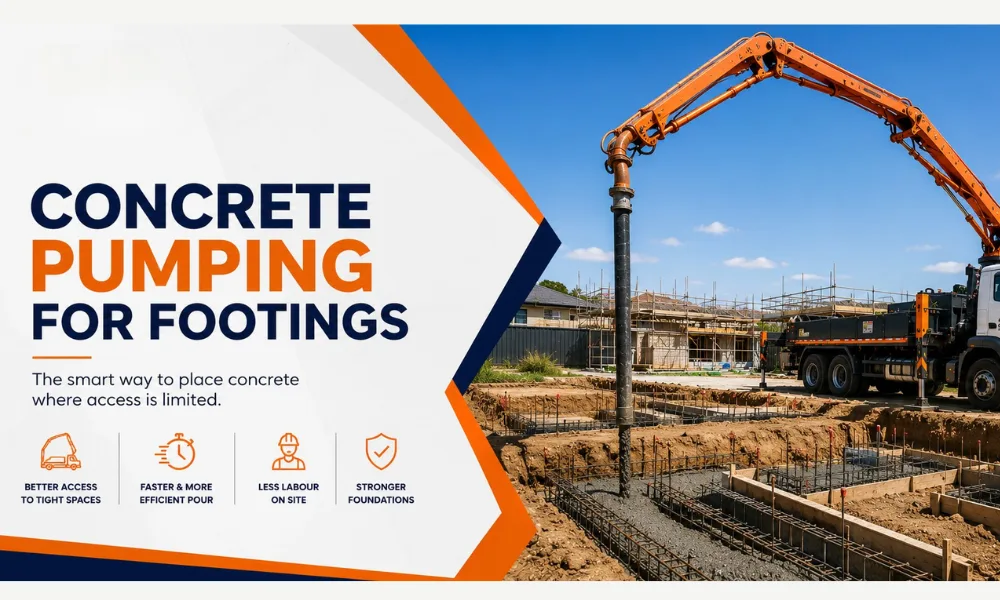
Concrete Pumping for Footings When Is It the Best Option
Strong and properly constructed footings are essential for the stability of many buildings and structures. Whether you’re working on a new home, extension, garage, retaining structure, or commercial development, getting concrete into the footing excavation efficiently is an important part of the construction process.
However, footing locations are not always easy to access. Excavations may be narrow, positioned behind existing structures, or located away from where a concrete mixer truck can safely park.
This is where concrete pumping for footings can be a practical solution.
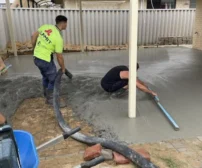
Concrete pumps allow freshly mixed concrete to be transported from the delivery truck through pipes, hoses, or a boom directly into the footing excavation. This can reduce manual handling, improve access, and help the construction crew maintain a more efficient concrete pour.
If you’re planning a construction project in Canberra, understanding when concrete pumping is useful and how to prepare for a footing pour can help you choose the right approach.
What Are Concrete Footings?
Concrete footings are structural elements designed to transfer the load of a building or structure into the supporting ground.
They are commonly used beneath:
- House foundations
- Extension foundations
- Garage structures
- Retaining walls
- Commercial buildings
- Posts and structural supports
- Other load-bearing structures
The size, depth, and reinforcement requirements of footings depend on the structural design and ground conditions. Your engineer or building professional determines the appropriate footing specifications for your project.
Once the excavation, reinforcement, and formwork are ready, concrete needs to be placed accurately into the prepared footing.
What Is Concrete Pumping for Footings?
Concrete pumping for footings involves using a concrete pump to move freshly mixed concrete from a mixer truck to the prepared footing excavation.
Rather than relying entirely on wheelbarrows or manual transport, the pump delivers concrete through a controlled delivery system.
Depending on the site, this may involve a line pump with flexible hoses or a boom pump with an articulated delivery arm.
The main purpose is simple: get the concrete from the truck to the footing efficiently and safely.
When Is Concrete Pumping the Best Option for Footings?
Concrete pumping isn’t necessary for every footing project. On a small, easily accessible site, direct discharge from the mixer truck may be sufficient.
However, pumping becomes particularly useful in several situations.
1. When Footings Are Difficult to Access
One of the biggest reasons to use concrete pumping is restricted access.
The footing may be located:
- Behind an existing house
- Inside a backyard
- Along a narrow side passage
- Behind fencing
- Away from the driveway
- Between existing structures
- On a sloping block
A concrete pump can allow the delivery system to reach areas that a mixer truck cannot access directly.
2. When Footings Are a Long Distance From the Truck
Sometimes the concrete truck can get close to the property but cannot get close enough to the actual footing excavation.
With a suitable pumping setup, concrete can travel through connected hoses or pipes from the pump to the required location.
This can eliminate a significant amount of manual transportation.
3. When There Are Multiple Footings
Projects with numerous footing trenches can involve a large amount of concrete movement.
A well-planned pumping setup can help the crew move systematically from one section to another while maintaining a steady supply of concrete.
This can be especially useful for larger residential and commercial foundation projects.
4. When the Site Has Limited Working Space
Construction sites can become crowded quickly.
Excavation equipment, reinforcement steel, formwork, building materials and other trades may all need to operate within the same area.
A concrete pump can help position concrete where it is needed without requiring large numbers of workers to transport it manually through the site.
5. When the Pour Needs to Be Completed Efficiently
Concrete placement needs to be coordinated with the concrete supplier and construction crew.
Pumping can provide a continuous method of delivering concrete while the crew focuses on placing, compacting and finishing it.
For larger footing pours, this can help maintain a more organised workflow.
Line Pump or Boom Pump for Footings?
The right type of concrete pump depends on the site and the project requirements.
Line Pumps
A line pump uses connected pipes and flexible hoses to transport concrete from the pump to the footing.
They can be particularly useful for:
- Residential foundations
- Narrow-access sites
- Backyard projects
- Extensions
- Long hose runs
- Footings located away from the street
The flexibility of the hose makes line pumps a popular option for many residential footing projects.
Boom Pumps
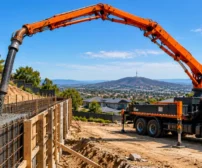
A boom pump uses an articulated arm mounted on a truck to position the delivery hose.
Boom pumps can be useful when:
- Greater reach is required
- Footings are spread across a larger site
- The concrete needs to be placed over obstacles
- Vertical reach is required
- The project involves a larger concrete volume
For some commercial or complex foundation projects, a boom pump can provide the reach and placement flexibility required.
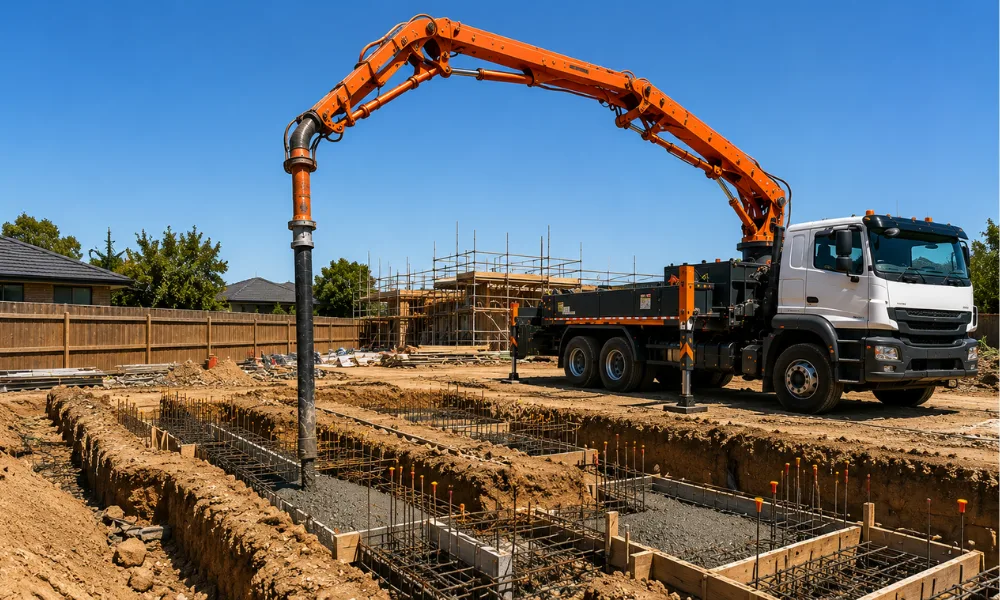
Concrete Pumping for Footings When Is It the Best Option
How Does Concrete Pumping for Footings Work?
The process starts with planning the pump setup around the footing excavation.
Step 1: Assess the Site
The pumping provider considers:
- Access
- Ground conditions
- Pump position
- Footing location
- Distance to the pour
- Hose or boom requirements
- Nearby structures
- Overhead obstacles
This helps determine the most suitable pumping equipment.
Step 2: Position the Pump
The pump is positioned in an appropriate location with sufficient space for operation and connection to the concrete delivery truck.
Step 3: Set Up Hoses or Boom
For a line pump, hoses and pipes are connected from the pump towards the footing excavation.
For a boom pump, the operator positions the boom to reach the required sections.
Step 4: Start Pumping
Fresh concrete is discharged from the mixer truck into the pump.
The pump then transfers the concrete through the delivery system towards the footing.
Step 5: Place and Compact the Concrete
The construction crew directs and places the concrete into the footing.
Concrete is then compacted as required to help minimise voids and achieve the required placement.
Step 6: Continue the Pour
The pump operator and construction crew coordinate the concrete flow as the footing pour progresses.
Good communication between the pump operator, concrete supplier and site crew is important throughout the process.
What Are the Benefits of Concrete Pumping for Footings?
Reduced Manual Labour
Pumping can reduce the amount of concrete that workers need to transport manually.
Better Site Access
Hoses can be routed around suitable obstacles and through restricted areas.
More Efficient Placement
Concrete can be delivered much closer to the actual footing location.
Improved Workflow
The construction crew can focus on placement and compaction instead of spending significant time moving concrete.
Useful for Complex Sites
Pumping can be particularly valuable where the footing excavation is difficult to reach with a mixer truck.
Can Concrete Be Pumped Into Narrow Footing Trenches?
Yes, concrete pumping can be suitable for narrow footing trenches, provided the pumping equipment, concrete mix and site setup are appropriate.
The delivery hose can be positioned close to the excavation so the crew can control where concrete is placed.
However, the footing design and placement requirements should always be followed according to the project’s engineering and construction specifications.
What Should You Consider Before Booking a Concrete Pump?
Before arranging concrete pumping for footings, provide the pumping company with accurate project information.
Footing Layout
Let the provider know where the footing trenches are located and whether there are multiple sections.
Concrete Volume
Provide the estimated amount of concrete required for the pour.
Pumping Distance
Estimate the distance between the pump position and the furthest footing.
Access Conditions
Mention narrow driveways, gates, fences, slopes and other restrictions.
Site Obstacles
Trees, buildings, overhead power lines and other structures may affect equipment positioning.
Pour Date
Concrete pumping should be coordinated with the concrete supplier and construction schedule.
How to Prepare Your Site for a Footing Pour
Good preparation helps the concrete pour run smoothly.
Before the pump arrives:
- Complete footing excavations
- Install required reinforcement
- Complete formwork where required
- Confirm dimensions and levels
- Clear pump access
- Remove unnecessary vehicles and materials
- Confirm the concrete delivery schedule
- Ensure the construction crew is ready
- Identify potential site hazards
The footing should be ready to receive concrete before the first mixer truck arrives.
Common Problems to Avoid
Poor Access Planning
Failing to consider pump and mixer truck access can cause unnecessary delays.
Not Measuring Narrow Entry Points
If the pump or delivery truck needs to enter the property, check the available width beforehand.
Delayed Concrete Deliveries
A pumping operation depends on a consistent supply of concrete. Coordinate delivery times carefully.
Incomplete Footing Preparation
Reinforcement, excavation and formwork should be ready before concrete arrives.
Choosing the Wrong Pump
A pump that doesn’t provide the required reach or access flexibility can create problems on pour day.
Discuss the site with the pumping provider before booking.
How Much Does Concrete Pumping for Footings Cost?
The cost varies from project to project.
Factors that may influence the price include:
- Pump type
- Hire duration
- Concrete volume
- Pumping distance
- Site accessibility
- Setup requirements
- Location
- Waiting time
- Additional hose or equipment requirements
For this reason, a project-specific quote is usually more useful than relying on a standard advertised rate.
When comparing concrete pump hire Canberra prices, check exactly what is included in the quote, including equipment, operator, setup and any applicable additional charges.
Concrete Pumping for Residential Footings
Residential foundation projects can often have challenging access conditions.
For example, an extension may be located at the rear of an existing home, while a new house may have narrow site access before surrounding construction is complete.
Concrete pumping can be useful for:
- New home footings
- House extensions
- Garage foundations
- Granny flat foundations
- Retaining wall footings
- Renovation projects
The appropriate pump depends on the individual property and footing layout.
Concrete Pumping for Commercial Footings
Commercial construction projects may involve larger footing systems, greater concrete volumes and tighter scheduling requirements.
Concrete pumping can assist with:
- Commercial building foundations
- Industrial structures
- Warehouses
- Large retaining structures
- Structural footings
- Civil construction projects
For larger sites, boom pumps may provide useful reach, while line pumps can offer flexibility where access is restricted.
Why Choose an Experienced Concrete Pumping Service?
Concrete pumping requires appropriate equipment, careful setup, and an experienced operator.
A professional pumping team can help with:
- Selecting suitable equipment
- Assessing site access
- Positioning the pump
- Setting up hoses or boom equipment
- Managing concrete flow
- Coordinating with the site crew
- Maintaining safe pumping procedures
Concrete Pump Canberra provides concrete pump hire with experienced operators and services for residential and commercial projects across Canberra and surrounding areas. The company states that its team has more than 20 years of hands-on industry experience.
Concrete Pumping for Footings in Canberra
Construction sites throughout Canberra can have very different access conditions, from established residential properties to open new-build sites.
Concrete Pump Canberra provides line and boom pumping solutions for different project requirements across Canberra and surrounding areas, including Queanbeyan, Yass, Cooma, and Bungendore.
Whether your footing excavation is located behind an existing home or forms part of a larger commercial construction project, discussing your site requirements with an experienced concrete pumping provider before the pour can help you select the right equipment.
Final Thoughts
Concrete pumping for footings can be an effective solution when traditional concrete placement methods are difficult or inefficient.
It can reduce manual handling, improve access, and help construction crews maintain a smoother workflow during footing pours.
The best results come from planning ahead. Consider the footing layout, concrete volume, pumping distance, site access, and required equipment before booking.
If you’re preparing a footing pour in Canberra, speaking with an experienced concrete pumping provider early in the planning process can help ensure the pump setup is appropriate for your site and project requirements.
Frequently Asked Questions
1. What is concrete pumping for footings?
Concrete pumping for footings involves using specialized pumping equipment to transfer freshly mixed concrete from a mixer truck into prepared footing trenches or structural footing areas.
2. Is concrete pumping suitable for house footings?
Yes. Concrete pumps can be suitable for new home foundations, extensions, garages, and other residential footing projects, particularly where access is restricted.
3. Can a concrete pump reach footing trenches behind a house?
Depending on the site, yes. A line pump can use flexible hoses to reach areas behind houses, while a boom pump may provide additional reach over obstacles.
4. Is a line pump or boom pump better for footings?
Neither is automatically better. A line pump can be useful for restricted-access residential sites, while a boom pump may be preferable when greater reach or coverage is required. The site conditions determine the most suitable option.
5. How far can concrete be pumped into footings?
The achievable distance depends on the pump, concrete mix, hose configuration, site conditions, and other technical factors. Your concrete pumping provider can assess the required distance before the pour.
6. Can concrete be pumped into narrow footing trenches?
Yes, provided the equipment and concrete mix are suitable and the footing has been prepared correctly. The delivery hose can be positioned close to the trench to assist with controlled placement.
7. How much does concrete pumping for footings cost?
Pricing depends on pump type, hire duration, concrete volume, pumping distance, site access, and setup requirements. A project-specific quote will provide a more accurate estimate.
8. What information do I need to provide when booking?
You should provide the project location, footing layout, estimated concrete volume, pumping distance, access conditions, required date and any height or site restrictions.
9. Does concrete pump hire include an operator?
Hire arrangements vary between providers. Concrete Pump Canberra offers concrete pump hire with experienced operators.
10. How do I prepare for a footing concrete pour?
Ensure the excavation, reinforcement, and required formwork are complete, clear the pump access area, coordinate concrete deliveries, and make sure the construction crew is ready before pumping begins.