
Concrete Pumping for Pool Construction How It Works
Building a swimming pool involves much more than digging a hole and filling it with water. From excavation and reinforcement to formwork and concrete placement, every stage needs to be carefully planned.
One of the most important stages is getting concrete into the pool structure accurately and efficiently. Because pool excavations can be below ground level, behind houses or in areas with restricted access, moving concrete directly from a mixer truck to the pool can sometimes be difficult.
This is where concrete pumping for pool construction can make the process much easier.
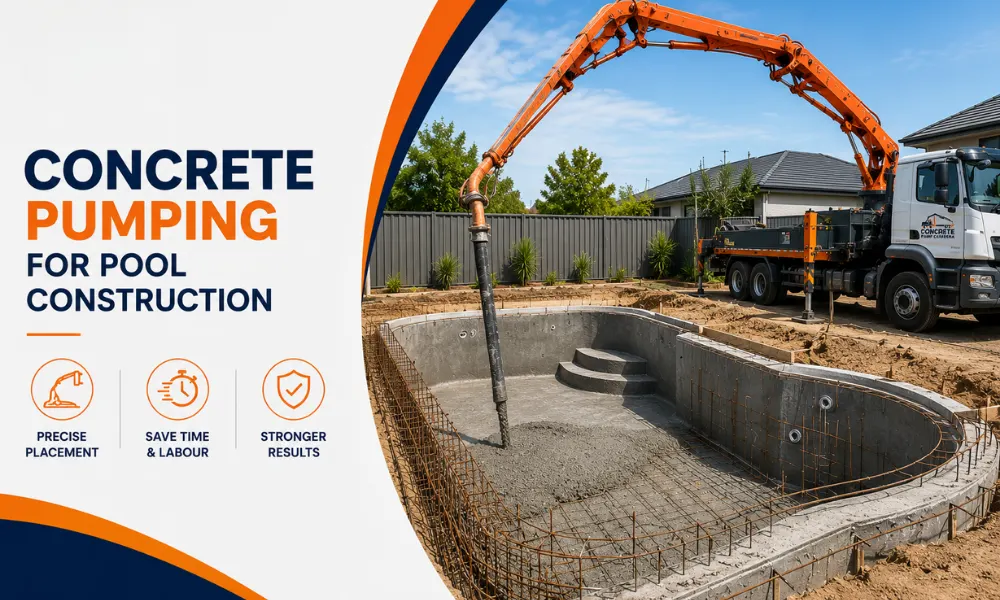
A concrete pump transfers freshly mixed concrete from the delivery truck through pipes, hoses or a boom system to the exact location where it is required. This can help reduce manual handling and provide a more controlled way to place concrete around pool walls, floors and structural components.
If you’re planning a new swimming pool in Canberra, understanding how concrete pumping works and what needs to be prepared beforehand can help your pool construction project run more smoothly.
What Is Concrete Pumping for Pool Construction?
Concrete pumping for pool construction is the process of using specialised pumping equipment to move wet concrete from a mixer truck to the pool excavation or other areas of the structure.
Instead of relying on workers to transport concrete using wheelbarrows or other manual methods, a pump uses pressure to move concrete through a delivery system.
This is particularly useful for swimming pools because the excavation may be:
- Below ground level
- Behind an existing house
- Away from the street
- Surrounded by landscaping
- Accessible only through a narrow driveway or side passage
- Difficult for a concrete mixer truck to reach directly
The appropriate pump depends on the pool design, site layout, access, pumping distance and the volume of concrete required.
Why Is Concrete Pumping Useful for Pool Construction?
Pool construction often involves complex site conditions. Even when the pool itself is relatively small, getting enough concrete into the excavation can be challenging.
Concrete pumping offers several practical advantages.
1. Easier Access to the Pool Excavation
A concrete mixer truck may not be able to drive directly beside the pool.
A suitable pump can position concrete through hoses or a boom system, allowing the concrete to travel from the truck to the excavation.
This can be especially helpful for backyard pools where houses, fences, gardens, or neighboring properties restrict vehicle access.
2. Reduced Manual Handling
Moving wet concrete manually can be physically demanding and time-consuming.
Pumping reduces the amount of manual transportation required by delivering concrete closer to the actual placement point.
This allows the construction crew to focus on spreading, compacting and finishing the concrete rather than spending unnecessary time moving it across the site.
3. More Efficient Placement
Concrete needs to be placed while it remains workable.
A well-planned pumping setup can help maintain a steady flow of concrete to the pool construction area, allowing the crew to work efficiently.
This is particularly important when a large quantity of concrete needs to be placed during one pour.
4. Better Reach
Pool excavations can be deep, narrow or located behind structures.
Depending on the site, a line pump or boom pump can provide the reach needed to get concrete into areas that would otherwise be difficult to access.
How Does Concrete Pumping for a Pool Work?
The exact process varies depending on the pool design and site conditions, but the basic process generally follows several stages.
Step 1: Assess the Pool Site
Before pumping begins, the pumping team needs to understand the site.
Important factors include:
- Pool location
- Access from the street
- Pump positioning area
- Distance to the excavation
- Pool depth
- Hose or boom route
- Overhead obstacles
- Ground conditions
- Nearby buildings and structures
Good planning at this stage helps determine the most appropriate pumping equipment.
Step 2: Choose the Right Pump
The two common options are line pumps and boom pumps.
Line pumps use connected pipes and flexible hoses. They can be particularly useful for residential pool projects where access is narrow or the pump needs to be positioned away from the excavation.
Boom pumps use a truck-mounted articulated boom to deliver concrete over obstacles and across greater distances. They may be suitable for larger pools or sites requiring significant reach.
The right choice depends on the individual site rather than simply the size of the pool.
Step 3: Position the Pump
The pump needs to be positioned in a suitable and stable location.
The team considers access, ground conditions, the concrete truck’s position and the route required to reach the pool.
Proper positioning is important for both efficient pumping and safe site operation.
Step 4: Set Up the Delivery System
For a line pump, pipes and flexible hoses are connected from the pump towards the pool excavation.
For a boom pump, the operator positions the boom to reach the required section of the pool structure.
The setup should allow the concrete crew to place the material without unnecessary movement or disruption.
Step 5: Pump the Concrete
Once the equipment and concrete supply are ready, concrete is fed into the pump.
The pump then pushes the concrete through the delivery system towards the pool.
The operator works closely with the construction crew to control the flow and direct concrete where it is needed.
Step 6: Place, Compact and Finish
As the concrete reaches the pool structure, workers distribute and compact it according to the construction requirements.
Depending on the pool design, concrete may be placed around reinforced sections, walls, footings or the pool floor.
The finishing process then ensures the concrete is properly levelled and prepared for the next stage of construction.
Line Pump or Boom Pump for a Swimming Pool?
Choosing the right equipment is one of the most important considerations when arranging concrete pumping for pool construction.
Line Pump
A line pump is often useful where:
- Access is restricted
- The pool is behind a house
- The driveway is narrow
- The pump needs to be positioned away from the pool
- Flexible hose routing is practical
- The project is a residential pool
The hoses can be routed through suitable access points towards the excavation.
Boom Pump
A boom pump can be advantageous where:
- The pool is difficult to access from ground level
- Greater reach is required
- The site has obstacles
- The project requires elevated placement
- A larger concrete volume needs to be placed efficiently
Boom pumps use an articulated arm to position the delivery hose over obstacles and into the required area.
The best equipment depends on the pool design and site conditions.
What Types of Pool Projects Can Use Concrete Pumping?
Concrete pumping can be used for a range of swimming pool construction applications.
These may include:
- In-ground swimming pools
- Concrete pool floors
- Reinforced pool walls
- Pool footings
- Pool surrounds
- Structural pool components
- Retaining structures associated with pool construction
- Pool renovation and extension projects
The exact pumping requirements should be discussed with the concrete pumping provider and pool builder before the pour.
Why Site Access Matters
Access is one of the biggest considerations when planning a pool concrete pour.
A pool may be located only a short distance from the road but still be difficult to reach because of:
- Narrow side passages
- Fences
- Existing buildings
- Landscaping
- Retaining walls
- Sloping blocks
- Limited driveway space
- Neighbouring properties
A professional pumping provider can assess these conditions before the pour and determine how the pump and delivery system should be positioned.
For Canberra projects, site conditions can vary significantly between residential properties, making proper planning particularly important.
How Much Concrete Is Needed for a Pool?
The amount of concrete required depends on the pool’s dimensions, structural design and construction method.
Your pool builder or structural engineer should determine the required concrete volume based on the approved design.
When booking the pump, provide the pumping contractor with the estimated concrete volume and expected pour duration.
This helps the pumping team understand the scale of the job and coordinate appropriately with the concrete supplier.
How to Prepare for a Pool Concrete Pour
Good preparation can make a significant difference on pour day.
Complete the Excavation
The pool excavation should be completed and ready for the next construction stage.
Prepare Reinforcement
Steel reinforcement should be installed according to the pool’s structural plans before concrete placement begins.
Check Formwork
Any required formwork should be correctly positioned and secure.
Clear Access
Remove unnecessary vehicles, equipment and materials from the pump and concrete truck access areas.
Confirm Concrete Delivery
Coordinate the arrival of concrete mixer trucks with the pump operator and construction crew.
Keep the Pour Area Ready
The crew should be ready to receive and work the concrete as soon as pumping begins.
Proper coordination helps minimise interruptions and keeps the pour moving efficiently.
Common Challenges When Pumping Concrete for Pools
Restricted Backyard Access
Many residential pools are located behind houses, making direct truck access impossible.
A line pump and flexible hoses can provide a practical solution where site conditions allow.
Long Pumping Distances
If the pool is far from the pump position, additional hose or pipe may be required.
The pumping provider should know the approximate distance before the job.
Deep Excavations
A deep pool excavation can require careful planning to ensure concrete reaches the correct location safely and efficiently.
Obstacles
Trees, fences, buildings and overhead structures can affect pump positioning and hose or boom routing.
Concrete Delivery Delays
Concrete pumping works best when the supply of concrete is properly coordinated.
Delays between mixer trucks can interrupt the pour and potentially increase pumping time.
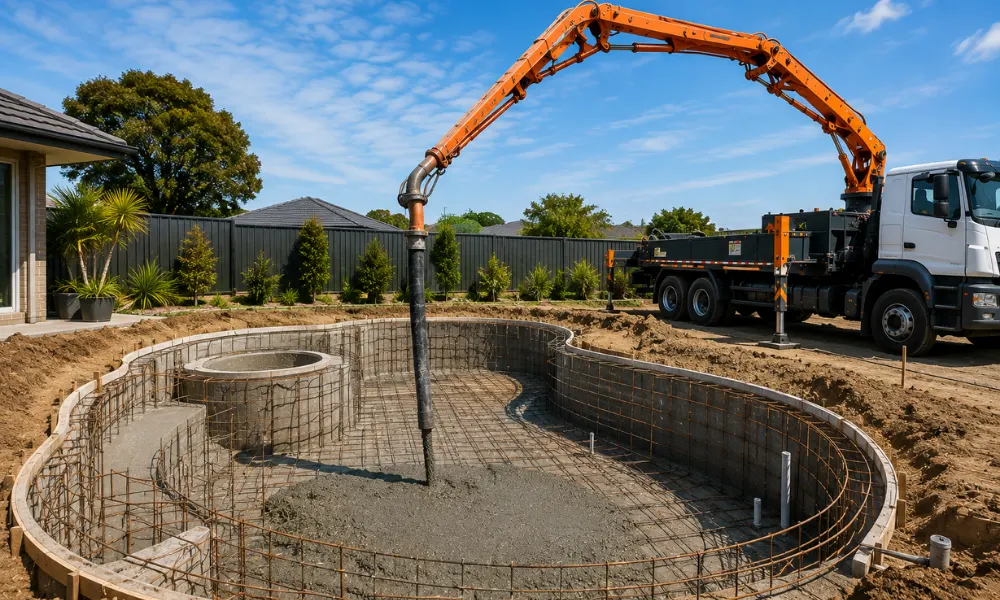
Concrete Pumping for Pool Construction How It Works
Benefits of Hiring an Experienced Concrete Pumping Team
Concrete pumping involves specialised machinery and requires an experienced operator.
A professional team can help with:
- Equipment selection
- Site assessment
- Pump positioning
- Hose or boom setup
- Concrete flow control
- Coordination with the concrete crew
- Safe pumping procedures
Concrete Pump Canberra provides concrete pump hire with experienced operators and states that its team has more than 20 years of hands-on industry experience. The company supports residential and commercial projects across Canberra and surrounding regions.
Concrete Pumping for Pool Construction in Canberra
If you’re building a swimming pool in Canberra, access and site layout should be considered early in the construction process.
Concrete Pump Canberra provides pumping solutions for residential and commercial projects and operates both line and boom pumps for different site requirements. Its services cover Canberra and surrounding areas including Queanbeyan, Yass, Cooma and Bungendore.
Whether the pool is located behind a house, on a restricted-access block or within a larger construction site, discussing the project with a concrete pumping provider before the scheduled pour can help determine the most suitable setup.
How to Book Concrete Pumping for Your Pool Project
Before requesting a quote, have the following information available:
- Project location
- Pool type and approximate dimensions
- Estimated concrete volume
- Pool excavation depth
- Distance from pump position to pool
- Available site access
- Preferred pour date
- Any height or reach requirements
- Site photos, if available
Providing these details can help the pumping provider understand your requirements and recommend an appropriate pumping solution.
Final Thoughts
Concrete pumping for pool construction can make concrete placement more efficient, particularly when a pool excavation is difficult to access directly.
The right pumping solution can reduce manual handling, improve access and help the construction crew maintain a smoother workflow during the concrete pour.
The key is to plan ahead. Consider site access, pumping distance, concrete volume, pool depth and the type of pump required before booking.
For a residential pool project in Canberra, working with an experienced concrete pumping team can help ensure the equipment, operator and concrete delivery are properly coordinated from the beginning.
Frequently Asked Questions
1. Why is concrete pumping used for pool construction?
Concrete pumping is used to transport freshly mixed concrete from the delivery truck to the pool excavation or structural area. It is particularly useful when the concrete truck cannot access the pool directly.
2. Can a concrete pump reach a backyard swimming pool?
Yes. Depending on the property layout, line pumps can use flexible hoses to reach backyard pools, while boom pumps can provide additional reach over obstacles. The site should be assessed before choosing the equipment.
3. Is a line pump suitable for pool construction?
A line pump can be suitable for many residential pool projects, particularly where access is restricted and flexible hose routing is practical. The appropriate pump depends on the site’s specific conditions.
4. When would a boom pump be better for a pool?
A boom pump may be preferable when the pool requires greater reach, the site contains obstacles or the concrete needs to be placed from a greater distance or height.
5. How much concrete does a swimming pool require?
The required concrete volume varies according to the pool’s dimensions, structural design, reinforcement and construction method. Your pool builder or engineer should provide the estimated volume before booking the pump.
6. Can concrete pumping be used for pool walls?
Yes. Concrete pumping can be used to place concrete into various structural sections of a pool, including walls and other reinforced components, provided the equipment and placement method are appropriate for the project.
7. How do I prepare my property for pool concrete pumping?
Clear the pump and mixer truck access areas, remove unnecessary obstacles, ensure the excavation and reinforcement are ready, and coordinate concrete deliveries with the pumping and pool construction teams.
8. How far can a concrete pump reach for a pool project?
The achievable reach depends on the pump type, equipment configuration, site layout, pumping distance, height and concrete characteristics. A professional operator can assess the project and determine a suitable setup.
9. Does Concrete Pump Canberra provide an operator?
Yes. Concrete Pump Canberra states that its concrete pump hire services include skilled operators with more than 20 years of hands-on industry experience.
10. Where does Concrete Pump Canberra provide pool concrete pumping?
Concrete Pump Canberra services Canberra and surrounding regions, including Queanbeyan, Yass, Cooma and Bungendore.