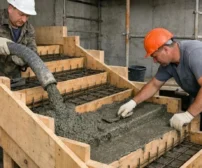
When concrete needs to reach a backyard, narrow block, driveway, slab, or another difficult-to-access area, getting the concrete to the right place can be one of the biggest challenges on a construction site. Traditional methods such as wheelbarrows may work for very small pours, but they can become slow, labor-intensive, and difficult when access is restricted.
This is where concrete line pump hire can make a significant difference.
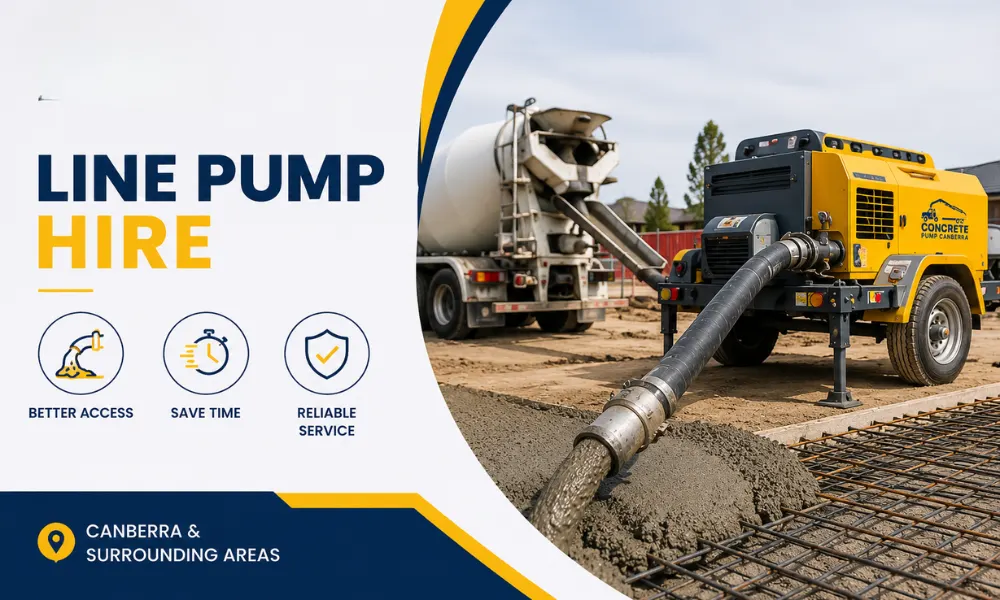
A line pump uses a series of connected pipes and flexible hoses to move concrete from the delivery truck to the exact location where it is required. Because the hoses can be positioned around obstacles and through narrow access points, line pumps are particularly useful for many residential and smaller commercial projects.
If you’re planning a concrete driveway, house slab, patio, footpath, retaining wall, or another project in Canberra, understanding how line pumping works can help you choose the right solution for your site.
What Is a Concrete Line Pump?
A concrete line pump is specialized equipment designed to transport freshly mixed concrete through a pipeline to the required pour location.
Unlike a boom pump, which uses a truck-mounted articulated boom to place concrete, a line pump relies on ground-level pipes and flexible hoses. This makes it highly versatile for sites where a large boom cannot easily be positioned.
The pump is typically positioned near the concrete delivery truck. The operator then connects the required lengths of pipeline and hose to create a route from the pump to the pour area.
Once the concrete is ready, the pump pushes it through the line under controlled pressure.
This allows concrete to be delivered efficiently without requiring workers to manually transport large quantities of concrete across the site.
When Should You Use Concrete Line Pump Hire?
Not every concrete project needs a line pump. However, there are several situations where concrete line pump hire can be a practical and efficient option.
1. When Site Access Is Restricted
One of the biggest advantages of a line pump is its ability to work in areas with limited access.
For example, your property may have:
- A narrow driveway
- A small side passage
- Fencing or landscaping around the work area
- Limited vehicle access
- A backyard that is far from the street
- Obstacles between the concrete truck and pour area
Instead of trying to move concrete manually through these areas, flexible hoses can be routed towards the required location.
This can make line pumps particularly useful for residential construction sites across Canberra.
2. For Residential Concrete Projects
Line pumps are commonly suitable for a variety of residential applications, including
- Concrete driveways
- House slabs
- Garage slabs
- Patios
- Paths and footpaths
- Retaining wall footings
- Backyard concrete
- Renovation projects
- Extensions
For homeowners working on properties where access is limited, a line pump can help simplify the concrete placement process.
3. When the Pour Area Is Away From the Street
Sometimes the concrete truck simply cannot get close enough to the area being poured.
A long hose arrangement can help bridge the distance between the pump and the pour location. The exact setup will depend on the site layout, concrete requirements, and pumping distance.
A professional operator can assess the site and determine an appropriate hose configuration before the pour begins.
4. When You Want Faster Concrete Placement
Moving concrete manually requires significant labor and coordination.
A concrete line pump can continuously deliver concrete to the pour area while the finishing crew concentrates on spreading, leveling, and finishing the surface.
Better coordination between the concrete supplier, pump operator, and finishing team can help reduce unnecessary delays and keep the project moving.
How Does a Concrete Line Pump Work?
The process is relatively straightforward, but professional operation is important because concrete pumping involves heavy equipment and pressurized lines.
Step 1: Site Assessment
Before pumping starts, the operator considers the site layout.
Important factors can include:
- Pump access
- Ground conditions
- Distance to the pour
- Hose route
- Obstacles
- Available working space
- Position of concrete delivery trucks
Proper planning helps reduce setup problems on pour day.
Step 2: Pump Positioning
The line pump is positioned in a suitable and stable location.
The operator needs enough space to safely operate the equipment and connect the concrete delivery system.
Step 3: Pipeline and Hose Setup
Pipes and flexible hoses are connected between the pump and the concrete placement area.
The route needs to be planned carefully so that the concrete can travel smoothly while keeping workers and other site activities safe.
Step 4: Concrete Pumping
Once everything is ready, concrete is fed into the pump.
The pump then pushes the concrete through the connected line towards the required location.
The operator controls the pumping process and works with the concrete crew to maintain a consistent flow.
Step 5: Placement and Finishing
As concrete reaches the pour area, the crew places and spreads it as required.
The finishing team can then level, screed, and finish the concrete according to the project’s requirements.
Step 6: Clean-Up and Pack-Up
After the pour is complete, the pumping equipment and hoses need to be cleaned and packed away properly.
Good site management is an important part of completing the job efficiently.
Concrete Line Pump vs. Boom Pump: What’s the Difference?
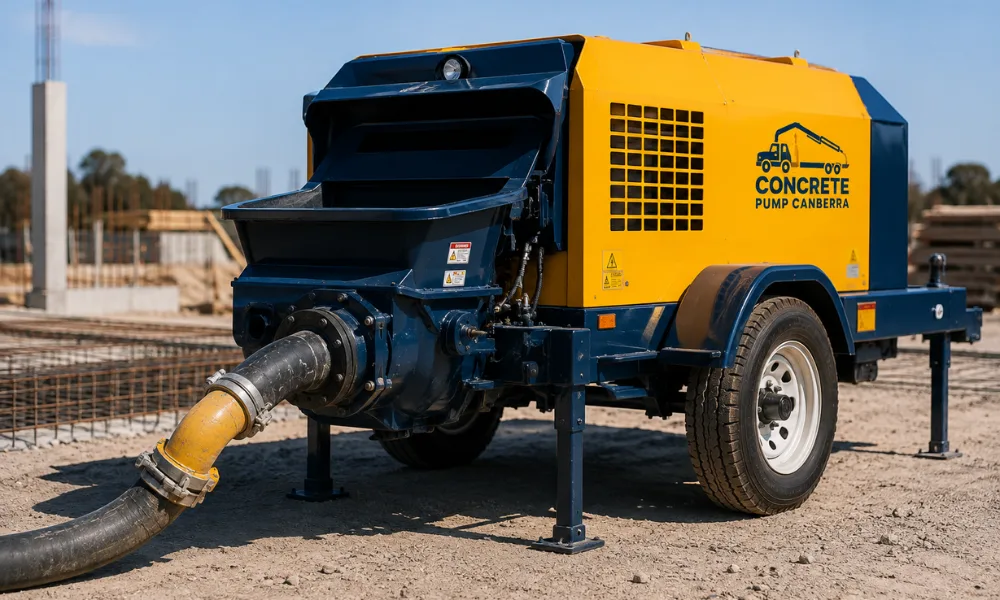
Both line pumps and boom pumps are designed to transport concrete, but they are suited to different site conditions.
| Feature | Line Pump | Boom Pump |
| Delivery method | Pipes and flexible hoses | Truck-mounted boom |
| Best suited for | Smaller and restricted-access projects | Large or complex pours |
| Tight access | Excellent | May require more setup space |
| Vertical reach | More limited | Excellent |
| Typical applications | Driveways, slabs, paths and backyards | Large slabs, commercial and elevated pours |
| Setup | Flexible hose routing | Requires boom and stabiliser space |
The best option depends on the size of the project, access conditions, pumping distance, height and overall site layout.
For example, a residential backyard with narrow access may be better suited to a line pump, while a large commercial or elevated project may require a boom pump.
A professional concrete pumping provider can help determine which equipment is appropriate for your specific project.
Key Benefits of Concrete Line Pump Hire
Improved Access
Flexible hoses allow concrete to be delivered around many common site obstacles.
Reduced Manual Handling
Instead of relying heavily on wheelbarrows and manual transport, concrete can be pumped directly towards the pour area.
Better Workflow
Pumping allows the placement crew to focus on spreading and finishing rather than spending excessive time transporting concrete.
Greater Flexibility
Line pumps can be useful for properties with narrow access, landscaping, fencing or other physical restrictions.
Efficient Concrete Placement
With the right setup and coordination, pumping can help keep concrete placement moving smoothly.
What Should You Consider Before Hiring a Line Pump?
Before arranging concrete line pump hire, there are several important factors to discuss with your pumping provider.
Project Size and Concrete Volume
The amount of concrete required can influence equipment selection, pumping time and scheduling.
Have your estimated concrete volume available when requesting a quote.
Site Access
Tell the pump provider about any potential access restrictions.
Important details include:
- Driveway width
- Gate width
- Distance from street to pour area
- Slopes
- Fences
- Overhead obstacles
- Landscaping
- Ground conditions
Photos or a site assessment can also help the provider understand the job before the scheduled pour.
Pumping Distance
The distance between the pump and the final pour location matters.
Longer pumping distances may require additional hose or pipe setup and should be discussed before the job.
Concrete Supply
Concrete deliveries need to be coordinated with the pumping operation.
If concrete trucks are delayed, the pumping process can be affected. Good scheduling between the concrete supplier, pump operator, and finishing crew can help minimise downtime.
Operator Experience
Concrete pumping requires more than simply supplying machinery.
An experienced operator understands equipment setup, hose management, pumping conditions, and site safety. Concrete Pump Canberra states that its operators have more than 20 years of hands-on industry experience.
How Much Does Concrete Line Pump Hire Cost?
There isn’t one fixed price for every concrete line pump hire project.
The total cost can depend on factors such as the following:
- Type of pump required
- Pumping duration
- Concrete volume
- Pumping distance
- Site accessibility
- Setup requirements
- Location
- Scheduling requirements
- Additional equipment or services
For this reason, it is better to request a project-specific quote rather than relying on a generic hourly rate.
When comparing quotes, look beyond the headline price. Check what is included, whether an experienced operator is provided, and whether setup or additional requirements are covered.
How to Prepare Your Site for a Line Pump
Good preparation can make the pumping process much smoother.
Before the pump arrives:
- Clear unnecessary vehicles, tools, and materials from the access route.
- Make sure gates and access points are wide enough.
- Remove avoidable obstacles around the hose route.
- Ensure the pour area is prepared before concrete arrives.
- Confirm the concrete delivery schedule.
- Make sure the finishing crew is ready.
- Inform the pump operator about any site-specific hazards.
Proper preparation can reduce delays and help your concrete pour stay on schedule.
Why Professional Concrete Pumping Matters
Concrete pumping may look straightforward from the outside, but the process involves heavy equipment, high-pressure pumping systems, and careful coordination.
Professional pumping services can help with:
- Correct equipment selection
- Safe pump positioning
- Efficient hose setup
- Controlled concrete placement
- Site coordination
- Safe equipment operation
For residential and commercial projects, choosing an experienced pumping team can help reduce avoidable problems and keep the pour organized.
Concrete Line Pump Hire in Canberra
Canberra properties can present different access and site challenges, from narrow residential blocks to larger commercial developments.
Concrete Pump Canberra provides concrete pump hire with experienced operators for residential and commercial projects across Canberra and surrounding regions. The company services areas including Canberra, Queanbeyan, Yass, Cooma, and Bungendore, with services covering applications such as slabs, driveways, patios, retaining walls, and tight-access sites.
Whether you’re preparing a residential driveway or coordinating a larger construction project, selecting the right pumping equipment and planning the pour properly can make a noticeable difference to the overall workflow.
Final Thoughts
Concrete line pump hire can be an effective solution when concrete needs to be placed in areas that are difficult to reach using traditional methods.
Line pumps are particularly useful for residential projects, restricted-access sites, backyards, driveways, slabs, and other applications where flexible hose placement provides an advantage.
The key is choosing the right equipment for your site, preparing the access route, coordinating concrete deliveries, and working with an experienced operator.
If you’re planning a concrete project in Canberra and aren’t sure whether a line pump is right for your site, speaking with a professional concrete pumping provider before the pour can help you make a more informed decision.
Frequently Asked Questions
1. What is concrete line pump hire?
Concrete line pump hire involves hiring a concrete pump that uses connected pipes and flexible hoses to transport concrete from the delivery truck to the required pour location. It is particularly useful for sites with restricted access.
2. When is a line pump better than a boom pump?
A line pump is often suitable for smaller residential projects, tight-access sites, and areas where flexible hose routing is useful. Boom pumps are generally better suited to larger projects or pours requiring significant vertical or horizontal reach.
3. Can a line pump reach a backyard?
Yes. One of the main benefits of a line pump is the ability to route flexible hoses through suitable access areas towards a backyard or other difficult-to-reach location. The exact setup depends on the property’s layout and pumping requirements.
4. What projects are suitable for concrete line pumps?
Line pumps can be suitable for driveways, house slabs, garage slabs, patios, footpaths, retaining wall footings, extensions, and various other residential and smaller commercial concrete projects.
5. How far can a concrete line pump pump concrete?
The achievable pumping distance depends on the equipment, concrete mix, site conditions, hose configuration, and other technical factors. A professional operator can assess the project and determine a suitable setup.
6. Does concrete line pump hire include an operator?
This depends on the provider and the hire arrangement. Concrete Pump Canberra provides concrete pump hire with experienced operators as part of its service offering.
7. How should I prepare my site for concrete pumping?
Ensure the pump has safe access, clear the hose route, prepare the pour area, and coordinate concrete deliveries with the pumping and finishing teams. Inform the operator about narrow access points, slopes, overhead obstacles, or other potential hazards.
8. Is concrete pumping faster than moving concrete manually?
Concrete pumping can significantly improve the efficiency of concrete placement by reducing manual transportation and allowing concrete to be delivered closer to the required pour location. The actual time saved depends on the project and site conditions.
9. How much does concrete line pump hire cost in Canberra?
The cost varies according to factors such as pump type, hire duration, concrete volume, pumping distance, site access, and setup requirements. A project-specific quote is the best way to understand the expected cost.
10. How do I choose the right concrete pump for my project?
Consider the project size, concrete volume, access conditions, pumping distance, required reach, and site layout. An experienced concrete pumping provider can assess these factors and recommend the most suitable equipment.