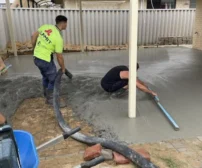

When planning a concrete project, timing matters just as much as the mix, preparation and finishing work. A delayed concrete pour can affect workers, equipment, site access and the overall construction schedule. This is why many homeowners, builders and contractors ask the same question before booking equipment: how long does concrete pumping take?
There is no single answer because every concrete pour is different. The pumping itself may be completed relatively quickly, but the total time on site depends on several factors. These include the volume of concrete, site access, pump setup, delivery of concrete, pumping distance, weather, crew size and the complexity of the pour.
For projects across Canberra, these factors can become particularly important. Residential blocks may have narrow access, sloping ground or restricted working areas. Larger construction sites may require more concrete, careful coordination and a steady delivery schedule.
Understanding what affects pumping time can help you prepare the site properly and organise concrete deliveries more efficiently.

How Long Does Concrete Pumping Take?
Concrete pumping time varies from project to project. A small residential pour with easy access may move quickly, while a larger slab or difficult-access site can require considerably more preparation and coordination.
It is useful to separate the process into several stages:
- Site preparation
- Pump arrival and positioning
- Pump setup
- Concrete delivery
- Concrete pumping
- Hose movement and repositioning
- Concrete placement
- Cleanup and washout
The actual pumping is only one part of the process.
For example, a driveway may have a straightforward pumping route but still require time for workers to prepare the area, position the hose and distribute the concrete. A larger slab may involve continuous concrete deliveries and a longer pumping operation.
This means the question should not only be how long does concrete pumping take, but also how well the entire pour has been planned.

What Happens During a Concrete Pumping Job?
A typical concrete pumping job follows a practical sequence. Good preparation before the pump arrives can make a significant difference to the workflow.
1. Site Preparation
Before pumping begins, the work area needs to be ready.
Formwork, reinforcement, access routes and the placement area should be checked before concrete arrives. Workers should also know where the concrete needs to go and how it will be spread and finished.
If the site is not ready, the concrete truck and pumping crew may need to wait. This can interrupt the planned pour sequence.
2. Pump Positioning
The pump needs to be positioned in a suitable location.
The operator must consider access, ground conditions, truck movement, overhead obstacles and the route from the pump to the placement area.
Canberra properties can have different block layouts, including narrow driveways, tight side access and sloping sites. These conditions may require more careful positioning.
3. Pump Setup
Once the equipment is positioned, the pumping system is prepared.
Depending on the equipment and project, this can involve setting up the delivery line or hose, checking connections and establishing a suitable pumping route.
The setup stage is important because a safe and efficient pumping arrangement helps reduce unnecessary delays during the pour.
4. Concrete Delivery and Pumping
Concrete is delivered to the site and transferred through the pumping system to the required location.
The pumping rate depends on the equipment, concrete mix, site conditions and the crew’s ability to receive and place the concrete.
The pump operator and ground crew need to work together throughout this stage.
5. Placement and Finishing
Pumping does not mean the concrete automatically finishes itself.
Once concrete reaches the required area, workers need to place, spread, level and finish it. The size and complexity of this work can have a major effect on the overall project timeline.
6. Cleanup
After pumping is complete, the equipment needs to be cleaned and the work area managed appropriately.
This final stage is part of the overall job and should be considered when planning site access and worker availability.
Key Factors That Affect Concrete Pumping Time
Several factors can change the duration of a concrete pour. Understanding them before the job starts makes scheduling easier.
1. Amount of Concrete Required
The volume of concrete is one of the most obvious factors.
A small residential project will generally require less concrete handling than a large slab, foundation or commercial project.
More concrete means more deliveries, more pumping and more time for placement and finishing.
However, the total volume alone does not determine the schedule. Delivery timing and site organisation are also important.
2. Distance Between the Pump and Pour Area
The distance that concrete needs to travel can influence the setup and pumping process.
A short, direct route may be relatively simple. A longer route can require additional hose or pipe sections and careful planning.
Vertical distance can also matter. Pumping concrete to an elevated location requires a suitable setup and attention to the pumping route.
This is why a site assessment is useful before deciding on the most practical pumping arrangement.
3. Site Access
Access is particularly important for concrete work in Canberra.
Some properties provide plenty of space for equipment and concrete trucks. Others may have narrow driveways, limited street access, fences, landscaping or nearby structures.
Restricted access can affect where the equipment is positioned and how the delivery route is organised.
For a project in areas such as Gungahlin, Belconnen, Tuggeranong or Yarralumla, the individual property layout matters more than the suburb itself.
A difficult-access site does not necessarily prevent concrete pumping. It simply requires better planning.
4. Type and Size of the Project
A simple residential pour and a large construction project have different requirements.
Concrete pumping for a driveway may involve a relatively defined placement area. A house slab can involve a larger footprint, reinforcement, multiple workers and continuous coordination.
Commercial projects can require even more planning because multiple trades may be working around the same area.
The larger and more complicated the project, the more important it becomes to coordinate concrete supply, pumping and finishing teams.
5. Concrete Delivery Schedule
Even an efficient pump cannot continue placing concrete if the supply is interrupted.
Concrete trucks need to arrive according to the planned pour sequence. If deliveries are delayed, workers and equipment may have to wait.
A well-organised delivery schedule helps maintain a consistent workflow.
This is particularly important for larger pours where multiple loads may be required.
6. Weather Conditions
Weather can influence concrete work in several ways.
Canberra experiences hot, dry summer conditions as well as cold winters. Temperature, wind, rain and changing site conditions can affect how concrete is handled and finished.
Hot conditions can increase the need for careful planning because concrete may behave differently as it loses moisture.
Rain can also interrupt outdoor concrete work and may make access more difficult.
Weather should therefore be considered when scheduling the pour rather than treated as an afterthought.
7. Crew Size and Organisation
Concrete pumping is a team operation.
The pump operator manages the equipment while other workers guide the hose, distribute the concrete and prepare the surface for finishing.
If the crew is well organised, the concrete can move smoothly from delivery truck to pump and then into the required area.
Poor coordination can create unnecessary pauses.
The number of workers required depends on the project size and placement method. A larger pour generally requires more people working in coordination.
8. Pump Setup and Hose Configuration
The pumping route needs to be practical and safe.
Depending on the site, the equipment may need to pump around structures or across areas where direct access is unavailable.
Every additional section of delivery line or hose needs to be positioned correctly.
A carefully planned route can reduce unnecessary movement during the pour.
9. Ground Conditions
The condition of the ground where equipment needs to operate can also affect preparation.
Soft, uneven or sloping ground may require additional consideration before equipment is positioned.
The pump needs to operate from a suitable location, and the surrounding area must allow workers to move safely.
This is particularly relevant for Canberra sites where blocks may have slopes or changing ground levels.
10. Complexity of the Pour
Not every concrete pour has a simple shape.
Curves, narrow sections, multiple levels, restricted areas and difficult placement points can all increase the time needed for concrete distribution.
A straightforward rectangular slab may be easier to manage than a project with several separate sections.
The more complex the placement, the more important it is to plan the pumping route and worker positions before concrete arrives.

Concrete Pumping for Driveways in Canberra
Driveways are a common application for concrete pumping.
A driveway may appear simple, but access can become challenging when the work area is behind a house, beside a building or separated from the street by a narrow path.
Concrete pumping can help move concrete from the delivery point to the required section without relying on long manual transport.
For concrete driveways Canberra homeowners should consider access, driveway dimensions, surface preparation and the distance between the pump and placement area.
The pumping time will depend on the amount of concrete and how easily the crew can distribute and finish it.
Good preparation before the concrete arrives can help keep the process moving.
Concrete Pumping for Slabs and Foundations
Slabs and foundations often require careful scheduling because concrete placement needs to follow the prepared formwork and reinforcement.
A slab pour may involve a continuous sequence where concrete is pumped into different areas while workers spread and level the material.
For larger slabs, maintaining a steady supply becomes especially important.
The pump location, concrete truck access, hose arrangement and finishing crew should be considered together.
This helps reduce interruptions during the pour.
Does a Larger Pump Always Mean a Faster Pour?
Not necessarily.
Equipment capacity is only one part of the process.
A pump may be capable of moving concrete efficiently, but the overall job can still take longer if access is restricted, deliveries are delayed or the finishing crew cannot keep pace.
Choosing suitable equipment is therefore more useful than simply choosing the largest available option.
When comparing options such as the best concrete pump Australia providers or equipment, consider the actual requirements of the project rather than equipment size alone.
The right setup should match the site’s access, pumping distance, concrete volume and placement requirements.

How to Reduce Delays During Concrete Pumping
Good preparation can make a major difference.
Prepare the Site Before the Pump Arrives
Formwork, reinforcement and the placement area should be ready before concrete delivery begins.
Avoid leaving major preparation work until the concrete truck is already on site.
Keep Access Clear
Make sure the pump and concrete trucks can reach their planned positions.
Remove unnecessary vehicles, materials and obstacles from the access route.
Plan the Pumping Route
Decide where the equipment will sit and how the concrete will travel to the placement area.
This is especially useful for restricted-access properties.
Coordinate Concrete Deliveries
For larger projects, delivery timing should be planned carefully.
A steady supply can help prevent interruptions during the pour.
Have the Finishing Crew Ready
Concrete should be placed and finished as part of a coordinated process.
Workers should be ready when concrete starts arriving rather than assembling at the last moment.
Consider the Weather
Check expected conditions before scheduling the work.
Hot, cold or wet conditions can affect the way outdoor concrete work is managed.
Choosing Concrete Pump Hire in Canberra
When arranging concrete pump hire Canberra, it is useful to provide accurate information about the project.
Important details include:
- Type of concrete project
- Approximate concrete volume
- Site location
- Access conditions
- Distance to the placement area
- Any height differences
- Preferred pour date
- Expected concrete delivery arrangements
- Any restricted or difficult-access areas
Providing these details early helps the pumping team understand the site’s requirements.
It can also make it easier to plan equipment positioning and the pumping route before work begins.
Why Site Planning Matters More Than a Fixed Pumping Time
People often want a simple answer to how long does concrete pumping take, but a fixed duration can be misleading without knowing the project details.
Two jobs requiring a similar amount of concrete can have very different schedules.
One may have open access, a short pumping route and an experienced finishing crew.
Another may involve a narrow driveway, a long hose route, difficult ground conditions and limited working space.
The amount of concrete may be similar, but the practical working conditions are completely different.
For this reason, concrete pumping should be planned around the individual site rather than based only on a standard estimated time.
Planning a Concrete Pour in Canberra
A successful concrete pour starts well before the pump arrives.
For homeowners, builders and contractors, the most useful approach is to consider the complete workflow.
First, make sure the site is prepared. Then confirm equipment access and the concrete delivery route. Next, plan where the pump will be positioned and how the concrete will reach the placement area.
The concrete supply and finishing crew should also be coordinated.
This approach can reduce avoidable waiting and make the work easier to manage.
For concrete Canberra projects, local site conditions should always be part of the planning process. Canberra’s mix of residential developments, established suburbs, sloping blocks and restricted-access properties means there is no universal setup for every job.
Final Thoughts
So, how long does concrete pumping take? The answer depends on much more than the pump itself.
Concrete volume, pumping distance, site access, equipment setup, weather, ground conditions, delivery schedules, crew organisation and the complexity of the pour can all affect the overall time.
The actual pumping stage is only one part of the job. Site preparation, concrete delivery, placement, finishing and cleanup all contribute to the complete project schedule.
For a Canberra concrete project, careful planning is especially valuable when working on narrow blocks, sloping sites or properties with restricted access.
By assessing the site in advance and coordinating the pump, concrete supply and finishing crew, you can create a smoother and more predictable pour.
Contact Information
Phone: 0431 961 460
Email: info@canberraconcretepump.com
Website: https://concretepumpcanberra.com.au/
Need reliable concrete pumping for your Canberra project? Get in touch with Concrete Pump Canberra today.